Showing posts with label Fitness Careers. Show all posts

Tuesday, 14 June 2016

To Roll or Not to Roll: Overview

Everyday I see hundreds of people sprawling around the floor in agony, while searching for pain free mobility. So, either, we are a masochistic society or it works. Yet many fitness experts still propose that foam rolling doesn't work. The result: controversy & a lot of semi-informed opinions.

Let's be honest, if the benefits of foam rolling didn't outweigh the associated discomfort, people would never do it. But, how does it actually work? and what are the best ways to achieve these benefits? Clearly there are a lot of effective methods to improve mobility. Regardless of the specific methods & tools chosen, I definitely think an integrated approach to movement is most appropriate. However, Since it's a blog and not a PhD dissertation, I decided to evaluate the effectiveness of SMR  (self myofascial release / foam rolling) only. If I went down the rabbit hole of examining all the different foam rolling devices & the possible paths to improving mobility, this 2 part Blog will continue for 2 months.

Given the recent excitement around mobility and stability, the increasing use of SMR techniques amongst athletes & fitness goers, conflicting opinions, my recent attempts to create a mobility based course, being a certified SMR master instructor, and obtaining my most recent certification (RAD Mobility 1 - $50 Off Promo Code is cb), it is time to dig deeper. To that end, this blog will focus on current research, some of the best practices and my personal experiences.
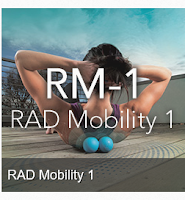
http://www.radroller.com/#_a_CB


Beyond the reasons above, I chose to write about SMR for several important reasons:
  1. It's self-care corrective tool that nearly everyone can access and use safely. 
  2. It's an instant mobility difference maker. When I show my nashFIT & BCPTI students www.bcpti.ca the SMR before and after reveals, they become super excited about mobility.
  3. I asked myself the following questions. What is my philosophy of movement correction? What does the science of mobility & corrective exercise say? What have I seen over my 12+ years of correcting movement.
  4. If you ask 12 mobility "experts", you can expect a minimum of 10 different opinions regarding what SMR does, when to use it, how to use it, what is the best tool for the job.
  5. Most people are not aware of the most effective SMR methods.


What is SMR? The simplest definition is "poor man's massage".
Self-myofascial release (SMR) is a technique that uses a rolling tool (foam roller, ball or rolling stick) to relax overactive / irritable tissue (i.e. trigger points), turn on underactive muscles & maybe breakdown adhesions between the gliding surfaces of soft tissue. Regardless of the actual outcome, recent theories suggest that compression &
 pressure along with movement over top of the issued area can engage the nervous system to either relax an overactive, or turn-on underactive muscle & muscular chains. Since trigger points & myofascial adhesions can both make a muscle tight and weak, it's important to a.) determine and b.) use the most effective techniques for the specific issue. Therefore, SMR isn't as simple as rolling up and down a sore area or tight muscle, it's a system of systematic search and destroy.

Science of SMR
Research has clearly indicated that SMR & other massage related techniques have multiple benefits (see below). For additional resources refer to the references listed in the online RAD Mobility 1 certification, which can be purchased on-line or the references at the end of this blog. If you are interested in learning the:
  1. Science of mobility & pain
  2. Passive range of motion assessments
  3. Cutting edge SMR techniques designed to help you work with clients and or individualize your own warm-up and recovery program, I'd highly recommend this course http://www.radroller.com/products/rad-mobility-level-1 . Readers of this Blog have access to a special discount code (see above).


Other potential benefits and reasons to SMR that I've experienced are:
  1. The apply pressure & hold method. Reactive hyperemia = occlude blood flow through pressure. When the pressure is released a rush nutrient rich blood flows into the muscle. It's the same philosophy associated with voodoo flossing.
  2. Reduced pain sensation. Compression techniques alone or in combination with either muscle shortening or lengthening procedures can lead to a significant reduction in perceived pain.
  3. Weak muscles activate &become strong. The pin & move techniques listed below create what is referred to as a muscle spindle lengthening technique (Trigenics, Neurkinectic Assessment & Myoneural Treatment Procedure). The perceived stretch of the mechanoreceptor leads to CNS activation and temporary strengthening of the previously weak muscle.
  4. Improved strength of distal muscles. Muscles in the same kinectic or myofascial chain are activated (turned on) as a result of stimulating tissue anywhere along that chain. For example rolling your big toe will nearly always turn on / strengthen a previously weak glute.
  5. Improved mobility of distal muscles. When the plantar fascia on the bottom of the feet are rolled, significant increases in straight leg toe touch as well as sit and reach ROM occur. These results are not permanent but longer than static stretching. The ROM improvements last much longer when "dead zone" strengthening is included. These improvements in posterior fascial line mobility occur in absence of strength loss (Sullivan, 2013).
The current P2P Prepair2Perform) RSS Corrective Mobility Model / Process:
Over my years of detecting and correcting movement errors, I've learned & tried a lot of different corrective techniques. Regardless of the exact technique, I always use 1 lens...does it work & can I reintegrate the changes into a progression based training program? Recently, I've been heavily contemplating the structure of my P2P model. Below is a bird's eye overview of the P2P corrective mobility model. I also have an integrative corrective movement model but it's less appropriate for this content. Regardless of the system, SMR is an integral part of the P2P program.

Step 1. perform a functional movement assessment.
Step 2. Release / SMR all muscles believe to be tight / overactive
Step 3. Stretch the tight / overactive muscles
Step 4. Strengthen the opposing or antagonist muscles
Step 5. reassess the restricted movements.

In part 2 of this blog I will examine SMR via case study & show you some of the best ways to quickly overcome several common mobility related issues. I will post this next Tues at the 7pm Pacific time.

References: from the Trigger Point Myofascial Compression Techniques: Principles & Practices Manual 2014

Chaitow L., DeLany J. (2008). Clinical Application of Neuromuscular Techniques: The Upper    Body Vol.1. Philadelphia: Elsevier.
Cook, G., Burton, L., & Hoogenboom, B. (2006). Pre-participation screening: The use of fundamental movements as an assessment of function—part 1. North American Journal of Sports Physical Therapy. 1(2). 62-72.
Knapp, Kali (2016). Self-care modalities: improved performance and decreased injury for female athletes. S & C Journal, 38(2), 70-78.
Diego, M., & Field, T. (2009). Moderate pressure massage elicits a parasympathetic nervous system response. International Journal of Neuroscience, 119(5), 630-638.
Healey, K.C., Hatfield, D.L., Blanpied, P., Dorfman, L.R., & Riebe, D. (2013). The effects of myofascial release with foam rolling on performance.  Journal of Strength and Conditioning Research, 28(1), 61-68.
MacDonald, G.Z., Penney, M.D.H., Mullaley, M.E., Cuconato, A.L., Drake, C.D.J., Behm, D.G., & Button, D.C. (2013). An acute bout of self-myofascial release increases range of motion without a subsequent decrease in muscle activation or force. Journal of Strength and Conditioning Research, 27(3), 812-821

Sullivan, K., Silvey, D., Button, D., & Behm, D. (2013). Roller-massager application to the hamstrings increases sit-and-reach range of motion within five to ten seconds without performance impairments. International Journal of Sports Physical Therapy, 8(3), 228-236.

I look forward to receiving your feedback and hearing your own success SMR stories.

Chad Benson, MSc, CSCS, CPT
email: info@bcpti.ca
Website: +BCPTI
Instagram: @prepair2perform & @bcpti
Facebook: Chad: Activated71 & BCPTI: http://ow.ly/4mK7yR
inkedIN: Chad: http://ow.ly/4mK7QL  & BCPTI: http://ow.ly/4mK7fB

Friday, 15 April 2016

The Foundations for Loaded Movement & Fascial Training: Active Mobility & Stability


Flexibility / mobility training is growing trend in the fitness industry. However, during the implementation process, the basic fundamentals of movement, like fascia, pain & flexibility science, assessment and biomechanics are often neglected, misunderstood or mismanaged. Therefore I was inspired to revisit the concept of mobility, especially as it relates to flexibility & stability. As important as flexibility / mobility training is to my own training, I also train these movement qualities knowing that  “mobility is best gained and then maintained when accompanied by joint stability & fascial integration”. Mobility is an active process that engages the movement portions of the brain in such a way as to help improve elasticity & stimulate permanent active range of motion changes.  In addition to freedom of movement, many muscles must contract simultaneously to create stiffness or stability around a joint.  When this occurs maximal strength, power and flexibility can occur in an environment where the risk of injury is decreased rather than increased.

“mobility is best gained and then maintained when accompanied by joint stability & fascial integration”

Mobility is best expressed as the ability use the entire available range of motion (ROM) without pain or restriction. Those who have mobility can also do so with strength and elasticity throughout the entire range of motion (ROM). We often refer to this form of complete mobility as loaded movement, a term coined by Michol Dalcourt. Above is a warm-up, using rhythmic movements that demonstrate how I Prepair the body for loaded movement training. Below is a great link to some of my favorite overall slow mobility exercises. These are usually performed by those who have significant movement impairment and muscle imbalance.
http://www.bcpti.ca/6-min-full-body-mobility-flexibility-sequence-nearly-everyone-can-2/


Loaded Foundations: mobility & stability
If loaded movement training is the ultimate outcome of mobility based training, what's the best path to achieve this elusive ability. In this blog, we are only going to discuss the foundations of loaded movement and save the final pieces of the movement puzzle for part b. At different points during my fitness career I've either focused more on stability or mobility, believing each was the greatest movement impairment solution my clients required at that time.  Through these experiences and continued learning, I've come to realize it's a constant juxtaposition between the two; requiring both at all times.  At the saying goes, there's no point robbing from Peter to pay Paul.  In that sense when joint instability is perceived, the central nervous system signals & creates events to restrict range of motion.  The two most commonly acknowledged ways to restrict range of motion are trigger points and pain.  Therefore adding range of motion without motor control (i.e. flexibility) via movement coordination & strength can be equated to opening Pandora's box.  The following is 6 tips to improve fundamental mobility but avoid the pitfalls of passive flexibility.
 
Foam roll / Self-Myofascial Release. The recent body of research in this area is clear. Increased blood flow, improved No2 delivery, increased ROM without a loss of strength, power or endurance & reduced risk of acute muscle strain are a few of the proven outcomes of foam rolling. Take a look at the recent flexibility research from two of the most current  mobility certifications available on the market.


Active not Passive stretching leads to a permanent change in mobility.  Passive mobility improves range of motion but does so through inhibition of the nervous system. Inhibition likely creates a "dead zone" at the newly achieved ranges and to a lesser degree throughout the entire range of motion (i.e. desensitization of mechanorecptors). A dead zone = a lack of motor control, strength & therefore stability in that range.  The inhibitory & dead zone affects likely explain recent research showing that static/passive flexibility decreases performance and potentially increases the risk of injury.

Active not Passive stretching improves stability. 
When a new range of motion is established motor control within that range requires eccentric concentric and isometric force inputs / training.  Without movement training, coordination & joint stability are compromised, thus preventing joint stability during high velocity, increased load, fatigue or reactive situations.

Active not Passive stretching improves your injury resistance.  Training in a proprioceptively nourished environment is required to improve joint stability.  When a muscle has not been used within a range of motion for a prolonged period of time innervation / activation is reduced to that area.  Due to instability and for the reasons outlined above this increases rather than decreases the risk of injury.
 

Posture Matters:  Sadly, the vast majority of the human population has some form of postural distortion which directly impacts their ability to perform in fitness, life and sport.

1. The spine houses the peripheral nerves which relay info from the brain
2. the spine & it's posture are essential components towards arm and leg strength.
3. Instability is perceived as a threat and occurs when proprioception is altered (shortened & lengthened muscles). 
4. Poor posture is a major reason why said proprioception is altered.
Result: the central nervous system decreases signaling to the peripheral nervous system which in turn decreases strength to the arms and legs.


Level the Pelvis: One of the more interesting tidbits I've learned over my career in regards to creating postural symmetry (i.e. level pelvis) in the lumbo-pelvic hip complex. Leveling the pelvis improves mobility of the joints in the arms and legs. From that realization I was inspired to make this video of 6 exercises designed to stabilize and level the pelvis three-dimensionally. If I were to add anything to this program, it would be the Gray Cook Hip Lift (https://youtu.be/s4I9F9rIqwM?list=PL699322D32F4B5DDE ) which is a one footed bridge. Each of these exercises is commonly part of my dynamic warm-up I perform prior to most functional and/or athletic training. The more of these movements I perform (see Core Activation Video below), especially with proper alignment, deep core stabilization (i.e. drawing in & core bracing), the less likely I am to feel nagging pain or sustain an injury during high intensity workouts. Mobility over stability is the reason I and most of my client's have been & remain injury free while continuing my unconventional, athletic style workouts.


Regarding flexibility, it's my opinion that most flexibility programs fail to create permanent change. Beyond the tips listed above, you can also read another blog I recently wrote. http://www.bcpti.ca/mobility-stability/ . When the CNS recognizes either a) instability b) a "dead zone" c) poor movement coordination d) strength it restricts motion of some muscles and down regulates activation of others. Interestingly, when you stretch a tight muscle, especially if there is an underlying joint instablity, the CNS can be temporarily tricked towards increased flexibility. However, and beyond the Pandora's Box discussed below, once the temporary desensitization of mechanoreceptors wears off, the CNS quickly recognizes the true instability issue hasn't been resolved. To prevent serious ligament & tendinous type injury, The CNS then signals a cascade of events to create movement restriction via preventive road blocks. Each of the following "road blocks" can restrict movement & force generation to the effected muscle & myofascial chain.
  1. Pain
  2. Myofascial adhesion
  3. Trigger point
In this sense, stretching without myofascial release & stability leads to a temporary flexibility change.

Take for an example a client with a winging scapula. The picture on the R is an assessment of internal shoulder rotation and extension (i.e. reach under).
  1. Pic 1 = myofascial release
  2. Pic 2 = popular mobilization technique in combination with a traditional internal rotation movement /passive stretch 
  3. Pic 3 = common shoulder stability exercise for a weak muscle the serratus anterior.
 
The question isn't which technique to use, the question is what amount of each is required. If for the example the teres major, pecs & pec minor are overactive and have road blocks (i.e. adhesion or TP), it must be resolved 1st, then apply 2-3 with the appropriate amount to create the greatest change.
  1. self-myofascial release
  2. apply assisted mobility
  3. strengthen the underactive serratus anterior
 
When it comes to flexibility Vs mobility, be careful of Pandora's box. If you stretchor inhibit tight muscles before a workout it may temporarily turn-down the mechanoreception & the central nervous system protective mechanism of tightness. It’s temporary, but stretching alone can disable the key mechanism (muscle tightness) needed for stability over an unstable joint. Therefore, increased range of motion via stretching alone may cause injury due to instability. This is especially true of stretching prior to athletic events and functional training (i.e highly unpredictable training environments). Therefore ,step 3 above is essential to the success of improved mobility. Similarly stretching without strengthening the new ROM creates a "dead zone", and negative, albeit temporary outcomes. To resolve this, Active Mobility seems to be the logical approach. Here is a 6 step process to progressively improve proprioception, strength & coordination within a "dead zone".
  1. Apply vibration to the entire system or the specific muscle
  2. Stimulate the nerve spinal root using oscillatory self rolling or massage
  3. Progressively achieve improved ROM with contract relax cycles (i.e. PNF)
  4. Progressively overload all especially eccentric strength at the new end ROM
  5. Progressively overload ballistic stretch via stretch shortening activities
  6. Integrate the new ROM back into sport life and fitness
Numerous resources and courses on this are available to help you learn techniques to execute against the 6 steps above.
  1. https://cdn.preterhuman.net/texts/body_and_health/Pavel%20Tsatsouline%20-%20Relax%20into%20Stretch%20(2001).pdf - achieving a new end range of motion with contract relax cycles
  2. www.functionalrangeconditioning.com - strengthening at end range of motion
  3. http://www.dragondoor.com/dv023/ - adding stretch shortening cycle & spring back via fascial integration at end range of motion
 
Regardless of the case presented thus far, it doesn't mean that passive flexibility training is unimportant, rather it means that flexibility without stability is dangerous. Without nervous system integration, the outcome of improved ROM is usually lost within 30 min - a few hours of completing the stretching protocol. The movements in the accompanying videos were generally created around the concept of mobility over top of stability. Although it's beyond the scope of this article, step 1 in this process of mobility is always a functional movement assessment & corrective flexibility. To that end, an assessment is performed and asymmetrical fascial release, activation & movement patterns performed to create reasonable symmetry before applying any of the active mobility exercises shown in any of the links within this document. When correctly applied, asymmetrical movements will help remove spinal & lumbo-pelvic hip complex instabilities. The goal is symmetry of the supporting structures before attempting improvements in flexibility and therefore creating mobility improvements that last. Here are a couple of mobility rules to keep in mind the next time you stretch:

  1. Remove muscle asymmetries first. I prefer a symmetrically tight person over a bendy asymmetric one. If the L quad is tighter than the R, stretch the L 2x as much.
  2. When performing a stretch focus on stabilizing nearby joints. For ex. during the Dead Bug, keep the spine neutral (no change in any portion of the spinal posture) but allow the legs and arms to move freely away from each other. The same applies for the Bird Dog.
  3. Avoid static stretches prior to functional, high intensity, high velocity training (i.e. Pandora’s Box). If static / passive mobility is used, some form of dynamic warm-up is required prior to activity. Ideally save the static stretches for the post workout bendiness.
  4. Flexibility is analogous to an iceberg - there is so much more going on underneath the surface. Once you have achieved the desired flexibility, add progressive strength to the newly created range of motion.

Good luck, have fun, and remember exercises are only as effective as a person performing them. I always recommend that fitness goers seek professional assistance when performing finely detailed movements, especially if they have been suffering from long-term pain. In part b, we will learn how to take out newly created mobility and add load (i.e. loaded / fascial movement training).


Chad Benson, MSc, CSCS, CPT
email: info@bcpti.ca
Website: +BCPTI
Instagram: @prepair2perform & @bcpti
Facebook: Chad: Activated71 & BCPTI: http://ow.ly/4mK7yR
inkedIN: Chad: http://ow.ly/4mK7QL  & BCPTI: http://ow.ly/4mK7fB